A "Red Flag" for Human Commitment
The Story of the Religious Freedom Data Center
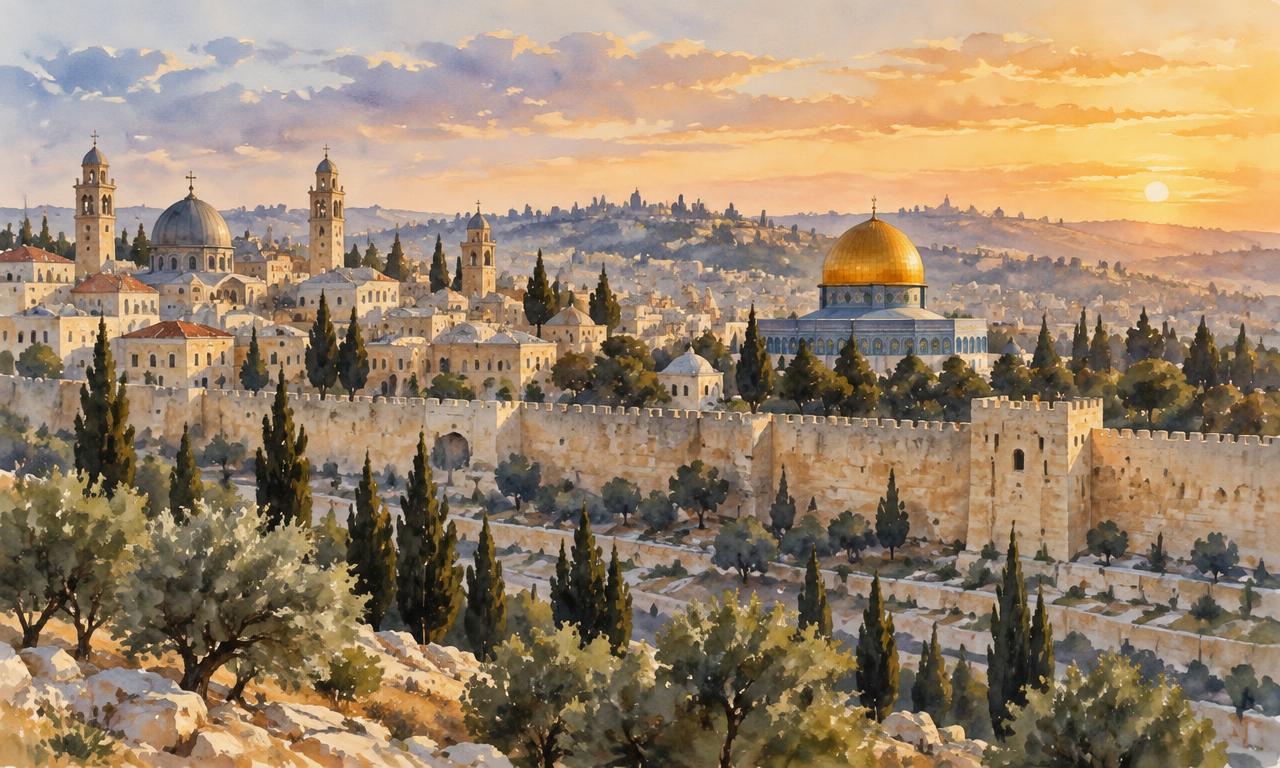
The Beginning of the Story: Jerusalem Changes Its Face
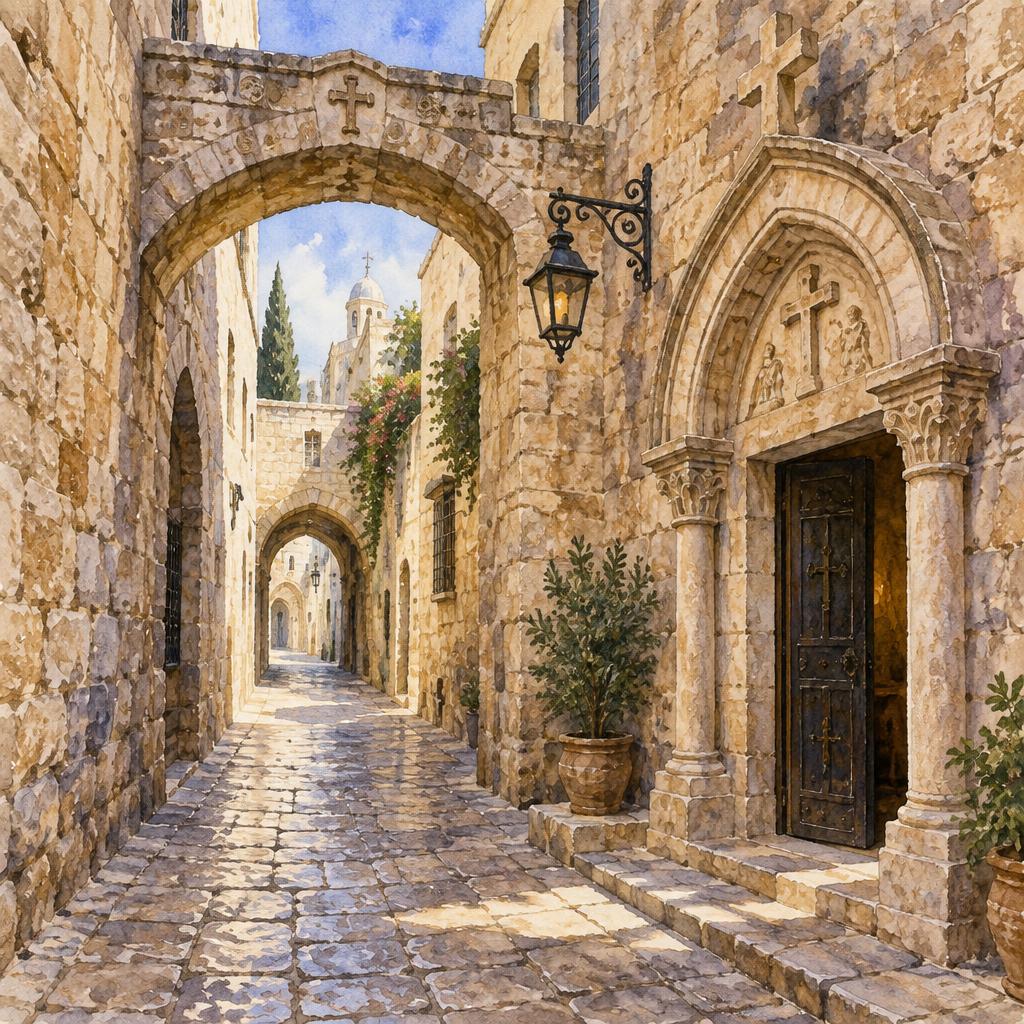
The reality in Jerusalem's Christian Quarter and the Old City has always been sensitive, challenging, and complex. However, at the beginning of 2023, something changed dramatically for the worse. The escalation in acts of harassment cast a dark shadow-sm over the city's ancient streets.
These incidents were no longer isolated acts, but a concentrated wave of targeted attacks against Christian symbols: a statue of Jesus at the Church of the Flagellation was vandalized; deliberate destruction occurred at the Protestant cemetery near Mount Zion; crosses were erased from public signs; and Christian clergy found themselves victims of repeated spitting and harassment. It became clear that these were no longer sporadic actions by fringe extremist groups, but a blatant and deliberate assault on the very heart of freedom of religious worship in Israel.
The testimonies of clergy members and the incidents themselves did not remain local matters. Immediate documentation by the victims and sharp reports from clergy led to extensive coverage in international media, placing Israel at the center of intense global criticism regarding the protection of religious freedom. The "red flag" was raised high over Jerusalem. The sense of shame was profound, and the demand for an immediate response was unavoidable.
The public and international outcry was so strong that it required state-level intervention at the highest level. President Isaac Herzog issued strong public condemnations, defining the incidents as "real crimes" that contradict the values of the State of Israel. Prime Minister Benjamin Netanyahu instructed the police to act more decisively to eradicate the phenomenon.
Yet amid the events, condemnations, and actions taken, a fundamental difficulty was exposed: reports of these attacks were inconsistent and unstructured, and there was no central, reliable, and independent body capable of collecting data systematically, accurately, rapidly, and professionally. The absence of such a body became an obstacle both for the authorities and for the Christian communities themselves, who felt alone in their struggle with Israeli bureaucracy.
In practice, an urgent need emerged for a bridging mechanism that could consistently connect the affected community with law enforcement authorities.
The Civic Response: The Birth of the RFDC
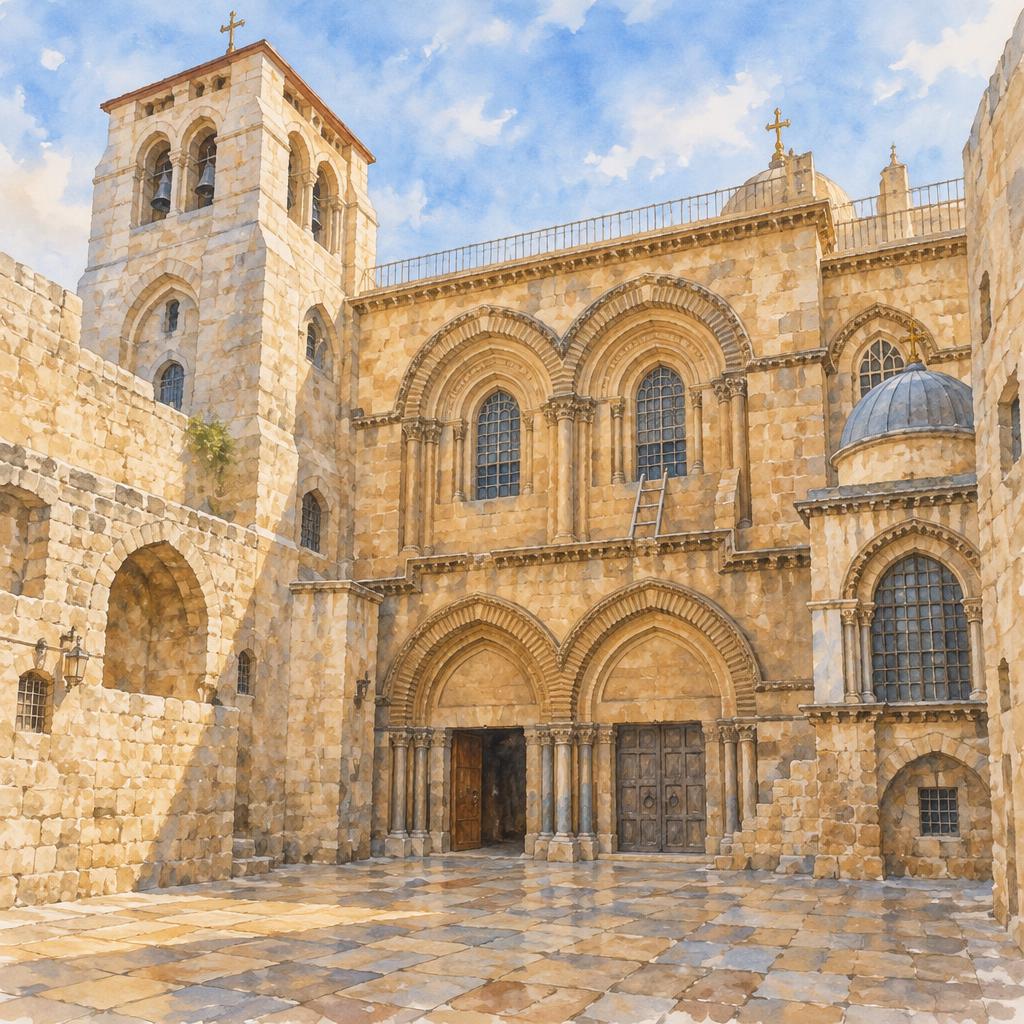
Recognizing this critical gap, an initiative was launched by a group of Jewish-Israeli citizens led by Yiscah Harani—a scholar of Christianity, licensed tour guide, and lecturer; an advisor to governmental and private organizations on Christianity and pilgrimage; and an active figure in the field of interfaith education. Together with professionals deeply familiar with the city's delicate fabric—tour guides, researchers, and clergy—they joined forces to establish the Religious Freedom Data Center and Monitoring of Harassment Against Christians (RFDC).
The RFDC is a non-political body specializing in facts, documentation, and objective data, free of sectoral or partisan interests. It is an organization with a clear Israeli commitment, viewing harm to the Christian community as a direct violation of the founding values of the State of Israel. Alongside formal procedures, it strives to create direct, ongoing human connections between Christian institutions and Jewish-Israeli volunteers.
The operational methodology chosen is one of documentation combined with accompaniment. The Religious Freedom Data Center views documentation as only the first step. We believe that responding to harm cannot be merely statistical; therefore, our approach is active and practical. Our goal is not only to document events after the fact, but to prevent harm, accompany victims, and provide assistance in real time.
At the heart of the Center's activity lies the "hotline"—a multi-channel reporting system staffed by dozens of Jewish-Israeli volunteers. This system enables clergy members, Christian institutions, and pilgrims to report any incident—spitting, vandalism, desecration of symbols, or threats—in real time. Every report undergoes meticulous verification, including precise location details and photographs, and the data is entered into a central database that allows for trend analysis and the identification of "hot spots."
At the same time, the human core of our work is the mechanism of personal pairing and accompaniment. Christian religious institutions—such as monasteries, churches, and centers—receive close support from Jewish-Israeli volunteers. Our volunteer group is composed of experienced men and women with high sensitivity and familiarity with the Christian world. Each volunteer serves as a permanent point of contact, familiar with the institution and its community. In the event of an incident, the volunteer acts as a "first responder": arriving on site, documenting the damage, and calming community members.
Subsequently, the volunteer plays a crucial role in mediating with authorities—assisting in drafting a clear and accurate complaint in Hebrew, accompanying clergy members to the police station, and ensuring that official reports are filed. The volunteer then follows up on the police handling of the case and updates the leadership of the religious institution.
This practical fieldwork is supported by professional partnerships, such as with the Rossing Center for Education and Dialogue. Legal conduct and the submission of reports to authorities are carried out with the assistance of the legal department of the Israel Religious Action Center. Complaints and testimonies are preserved by the Center, and based on the data we collect, we publish detailed periodic reports presenting incident data and trend analyses. These reports are distributed to governmental, diplomatic, police, and media actors and are also available on our website under the heading "Quarterly Reports."
Beyond documentation, we serve as a moral voice vis-à-vis decision-makers—working to raise awareness among the Jewish-Israeli public of the importance of religious freedom and to push for structural changes, increased enforcement, and deterrent punishment against perpetrators. The Center is operated and funded by private citizens and is not affiliated with any governmental institution or political body.
A Call for Partnership and Shared Life

The Religious Freedom Data Center views its work not only as an enforcement and documentation mission, but first and foremost as a moral and social one. We operate from the belief that freedom of worship and personal security are not privileges, but fundamental rights anchored in Israel's Declaration of Independence. As the Center's founder, Yiscah Harani, has stated, harm to Christians is harm to the "interconnected vessels" of life in the Holy Land:
"This city is sensitive and shared by all. It is not 'us' and 'them'—these are people who live among us, and we share the same space. When there is harm to a person or a community on religious grounds, it is not only a criminal act; it is damage to the delicate fabric of life in Jerusalem and throughout Israel. Mutual respect and tolerance are the cornerstones without which we cannot live here in peace."
We believe that the solution does not lie solely in harsher punishment, but in building broad civic responsibility on our part, as Jewish Israelis, to protect the right of our Christian neighbors to live and practice their faith freely and with dignity. This is proof—to ourselves and to the world—that our democratic and humanistic values are stronger than fanaticism.
We call upon the Jewish-Israeli public, the local Christian community, and all friends of Israel worldwide:
Report to us any incident you witness—every detail matters.
Support the Center's activities—this is an act of partnership, a demonstration of mutual responsibility, and an investment in our shared future.
Help us illuminate the dark corners of fanaticism and abuse, so that together we can build a future in which Jerusalem, a city of three religions, will be a capital of tolerance and mutual respect.
We are committed to continuing our work until every church, monastery, and member of the clergy feels safe in this land.
